Willy the Disk
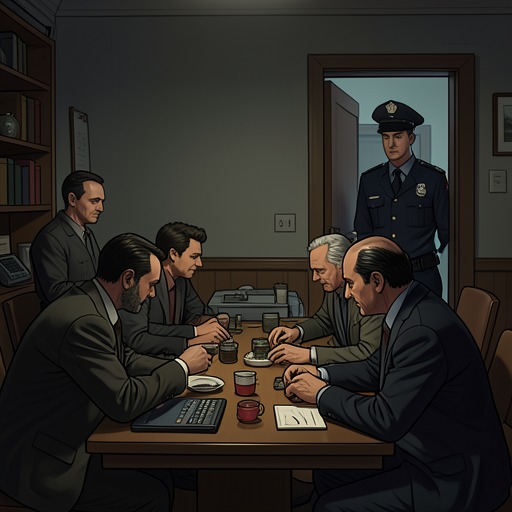
Naked LunchWilly the Disk is the police’s blind tracker, feared both for his relentless pursuit of the narrator and for the appetite that makes him dangerous even to those he captures. His damaged body is described through the needs and limits of his remaining senses; in the pursuit, he becomes at once a tool of surveillance and a threat that the police must restrain.
Identity and Condition
The narrator identifies Willy as the blind tracker leading the police toward him. He is blind after an eye injury, and his nose and palate have been damaged by sniffing heroin. His body bears extensive scarring, and he can now consume drugs only through his unusual mouth. These details give Willy an identity shaped by the consequences of addiction and by the altered means through which he seeks it.
Pursuit and Police Work
Willy follows the narrator’s trail across the city, entering rooms after the narrator has already moved on. His pursuit is not limited to a single search: the narrator hears him in the darkness and knows that the police have put the Disk on the case. Willy’s ability to track him makes the threat of arrest feel persistent, extending across successive hiding places.
When the police close in, Willy becomes difficult to control. He attacks a door, and the officers restrain him with a stock probe. The restraint makes clear that he is not simply an instrument of the police: his drug-seeking drive can overwhelm the operation and endanger the people he tracks. Without police intervention, the narrator believes, Willy would take drugs from those he caught.
Threat and Narrative Significance
The narrator fears not only arrest but also what customers might say if they testify. He imagines them claiming that he forced them into sexual acts in exchange for drugs, which would end his ability to remain on the street. That anticipated accusation raises the stakes of Willy’s pursuit without establishing that such testimony has occurred.
Willy’s role fuses detection with appetite. He follows a trail through the city, but the pursuit is also driven by his need for heroin; police procedure must contain the force it deploys. The narrator’s account thus presents surveillance as unstable: the tracker can locate his target, yet the authorities’ control over their own pursuer depends on physical restraint. Willy’s appearance in the opening pursuit gives that instability a human form, while the account offers no later resolution of his fate.